Circular cities, regions and countries are emerging around the globe. Places like Glasgow and Amsterdam are collaborating and sharing what they learn to help each other develop circular systems. They’re trying out new ways of thinking, working, taking action and gathering insights.
The pathway to the circular economy is based on a practice of learning by doing. It’s something that happens in the messy, real world. It needs to be supported by new models of policy development, business, investment and working together.
The Ellen MacArthur Foundation recommends focusing on five key policy goals that work together to make the transition to a more circular economy. All five are necessary to enable the transition.
The basic idea is that we need to design better ways to produce and consume if we want to make the shift to a circular economy. The diagram below outlines how the five pieces of the puzzle fit together to drive the transition.
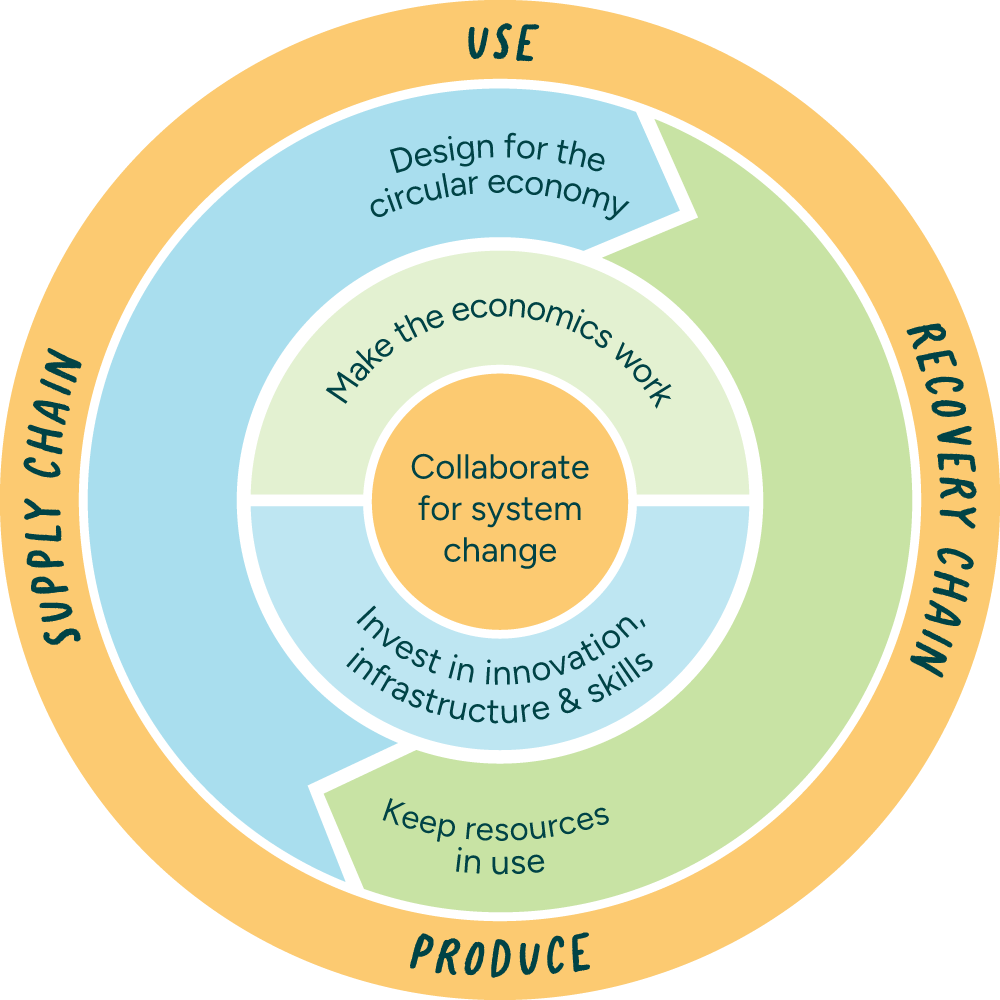
Redesign products and services and keep resources in use
Designing for the circular economy and keeping resources in use are two halves of the same cycle. Up to 80% of a product’s environmental impacts are determined at the design stage.
By redesigning products, packaging, business models and service models we can make sure that food, goods and our built environment are produced, accessed and used in ways that:
- eliminate waste and pollution
- enable products and materials to stay in circulation for longer and
- regenerate natural systems
This will radically reduce the amount of material flowing into and through our economy. It will also reduce the greenhouse gas emissions from making and using all our stuff across its life cycle.
Clear standards, traceability and labelling mean businesses put durable, reusable, recyclable, compostable products on the shelves, which makes it easy for consumers to make good choices.
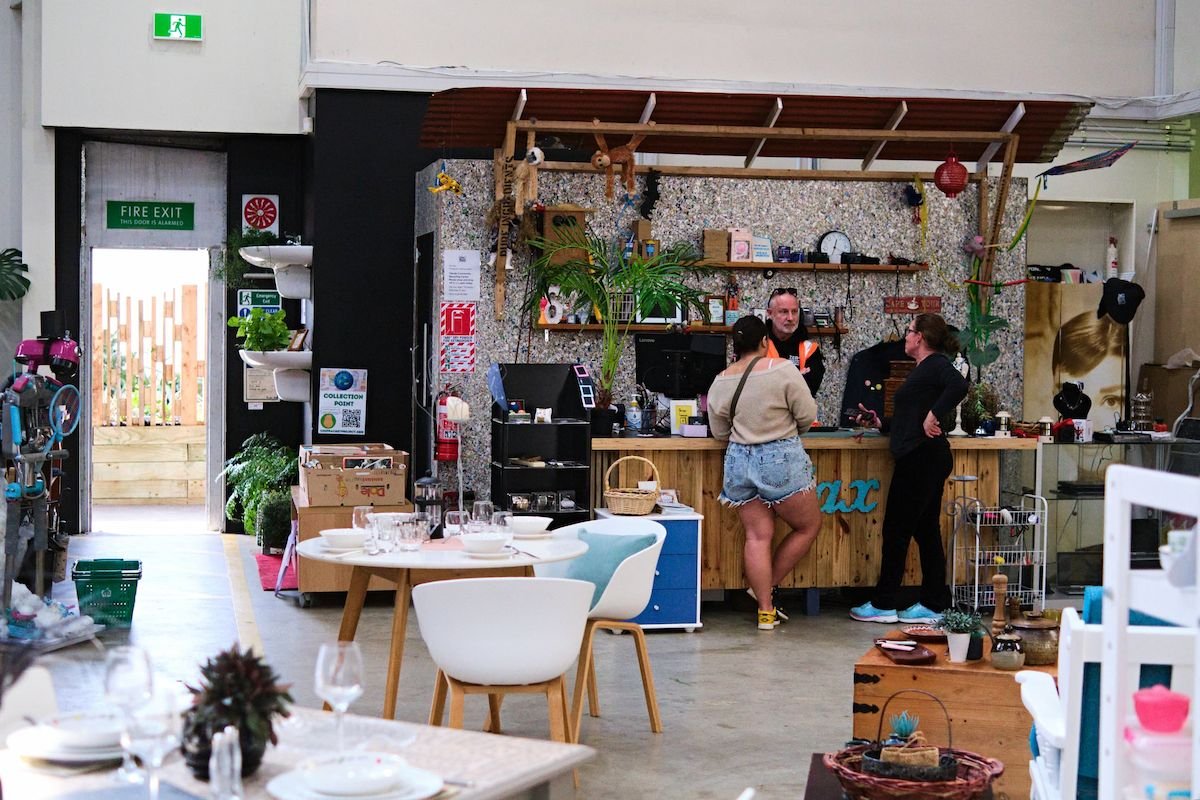
Careful product and packaging design sets us up for a safe, clean resource recovery chain. It helps make reuse, refill, repair, refurbishment, deconstruction and high quality closed loop recycling and composting are the norm.
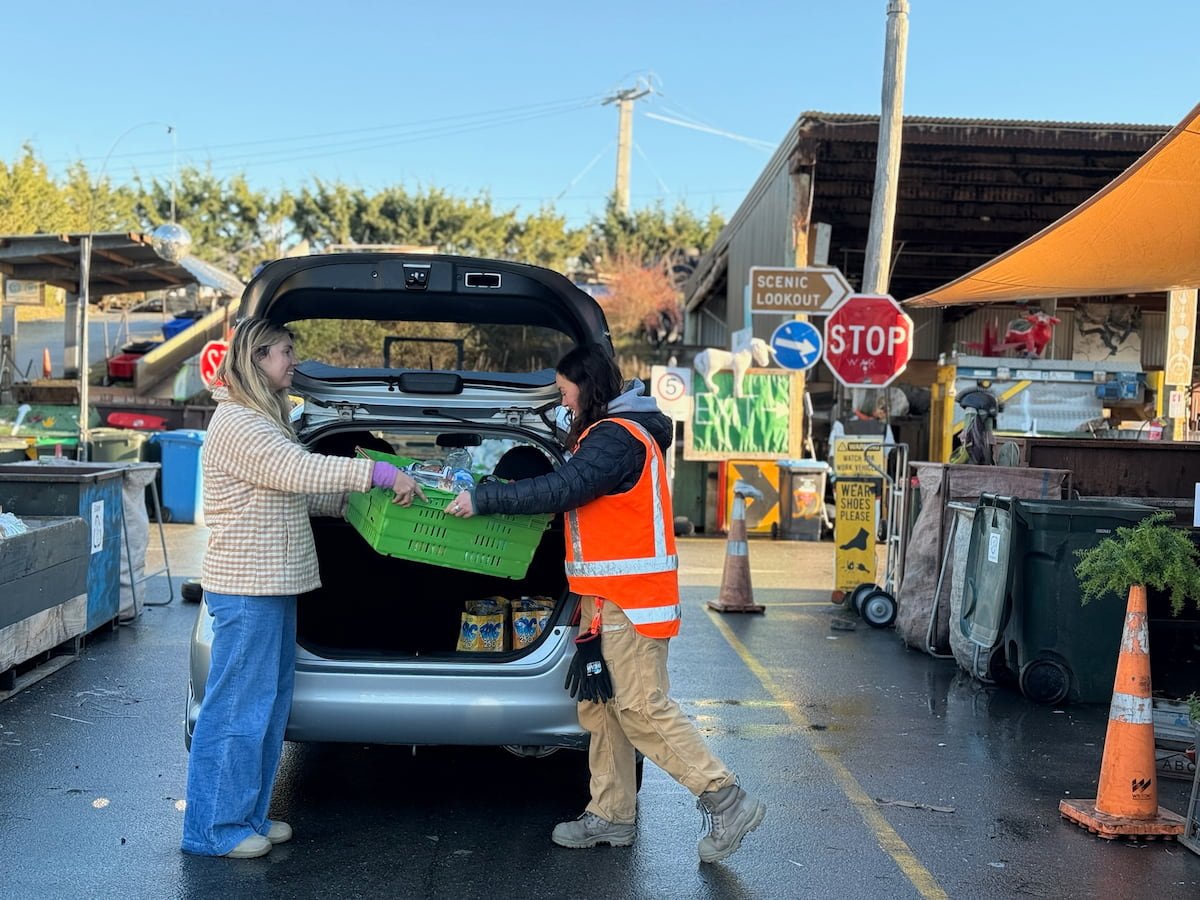
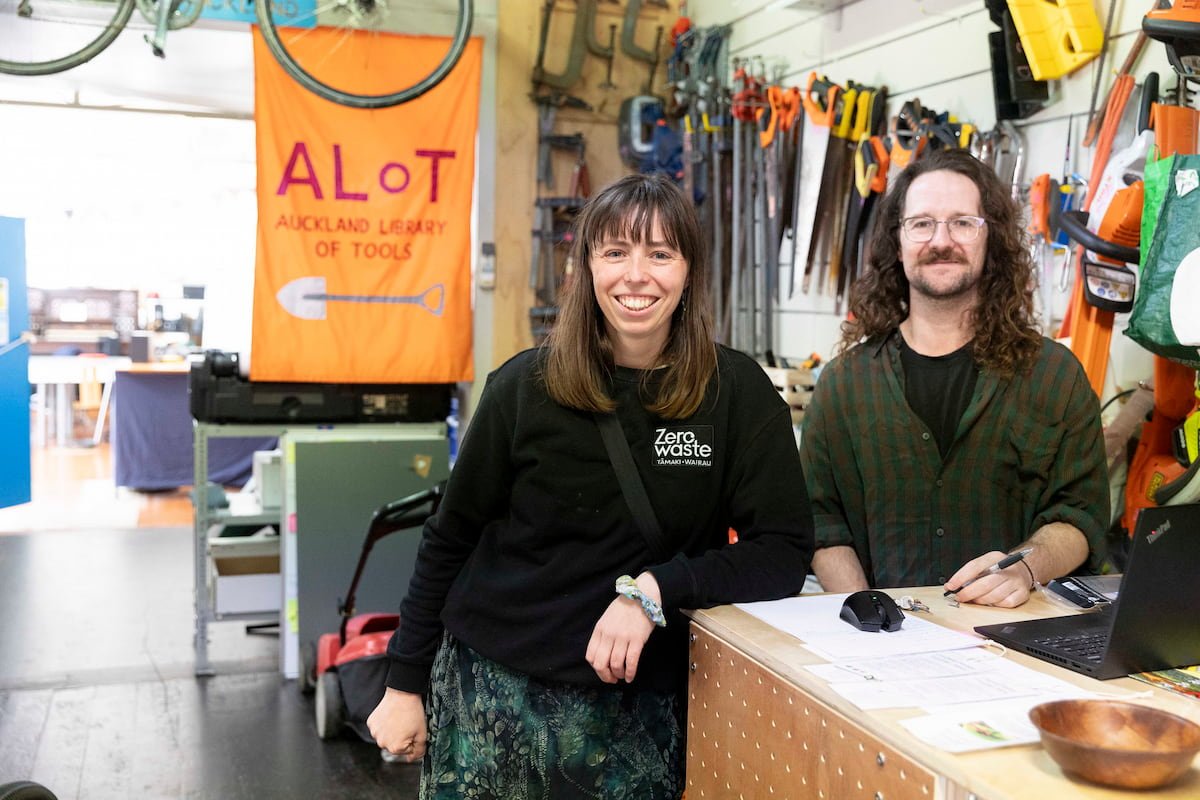
Circular systems make the best use of the resources and energy embodied in products and packaging by extending their useful life. Sharing models mean only a few tools or cars need to be produced and everyone who needs to use them can have their turn.
Source separated collections keep contamination out, so quality raw materials can become recycled content in new products. Healthy compost feeds soils for regenerative food production and sustainable timber and carbon sequestration projects.
Which takes us back around to the beginning again, to responsible production practices.
Make the Economics Work
The way things work at the moment, there’s little incentive for businesses to adapt their product design, business or service models to embed circular practice.
The government needs to set up a strong product policy framework. Laws, regulation, policy and economic instruments must drive businesses towards circular systems and away from extractive, linear approaches. This needs to be carried through into all our international trade agreements.
Compliance, monitoring and enforcement are critical to make sure the rules are being followed. Setting limits, clearly defining concepts and standards and creating transparency helps drive innovation. We can use council, business and government buying power to invest in and grow circular systems and infrastructure.
Invest in Innovation, Infrastructure and Skills
The first thing that comes to mind with infrastructure is equipment and the built environment. But the human ‘software’ required to run circular systems is just as important as the hardware.
Capacity and capability building is a critical part of the transition. It’s critical that we invest in building new skills and knowledge in people and organisations if we want to make a fair and just transition to a circular economy. At the local scale, there’s a huge opportunity to invest in upskilling and bringing people on board through practical, experience based projects.
A stable and viable resource recovery system is a public good. We have to invest in it. Then we can harvest all the products and materials flowing through our economy and send them back around again for reuse, repair, refurbishment, composting and closed loop recycling.
We need to make a lot better use of the infrastructure we have already, maintaining it and repurposing it so it better serves circular systems. Infrastructure, and the technology we need to support it, must be flexible so we can adapt it over time as systems and processes change.
Collaborate for system change
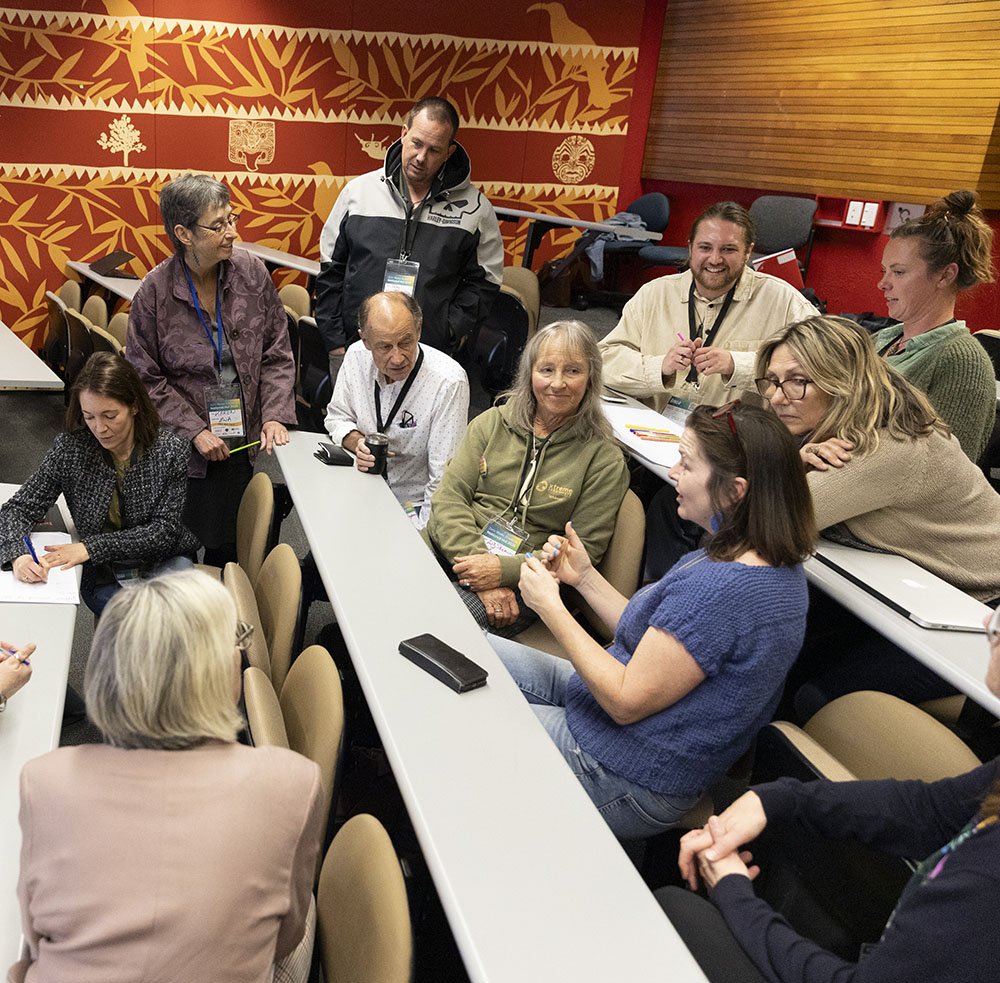
To make the shift to a circular economy we have to get a whole lot better at working together. Relationships that embrace diversity, inclusion, dialogue and engagement are key. Conversation and listening skills will be the currency of this new approach.
Climate change and system change mean we’ll all have to get better at learning and adapting as we go along. We need a bigger version of what knowledge is, so we can appreciate and value all different kinds. Lived experience, mātauranga, tikanga, action research, learning-by-doing, academic, government, business and science are all useful and legitimate ways of knowing and understanding our world.
This work must be underpinned by a strong Te Tiriti Māori-Crown partnership that embeds Te Ao Māori, mātauranga and tikanga. Getting to know each other and the stories that define us as a nation is a necessary part of the transition process. There’s a lot of work still to be done to heal the deep wounds created through the colonisation process.