System change for zero waste
We all want to do our bit to reduce waste, pollution and emissions and help care for our beautiful country.
Zero waste gives us a practical toolkit, a roadmap, and a clean, safe destination to head for. It’s about loving and appreciating the things we have, caring for them and keeping them going for as long as we can.

There are five main ways we can work on making our economy more resourceful. They are all about getting the right systems and infrastructure in place so it’s easy for us all to do our bit to help care for Aotearoa.
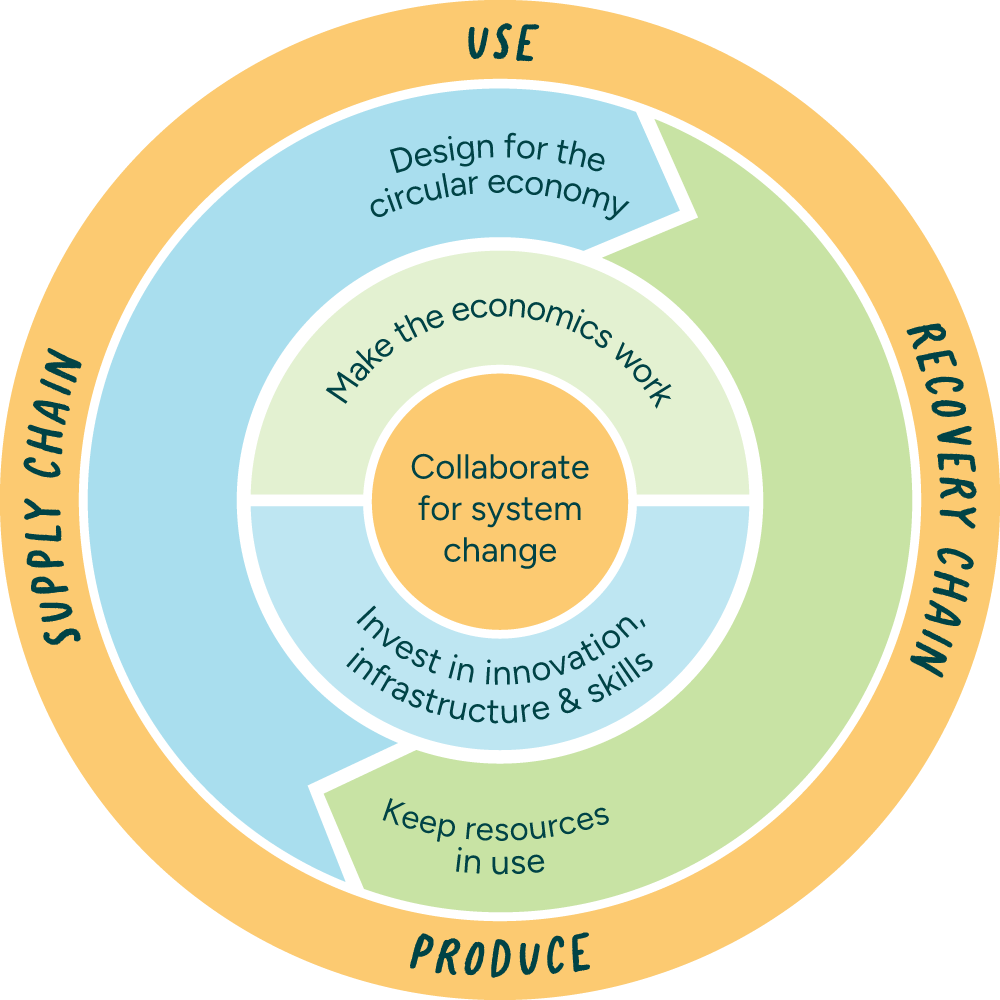
The change starts with a redesign of the products and packaging going onto the shelves and the business models that get them to us. To kick the single use habit we need to invest in the infrastructure and skill base to grow repair and reuse systems, rental and sharing models. That will keep products and materials in circulation for as long as possible before we collect, dismantle and safely recycle everything we can. The government and big business have to make the economics work so reuse, composting and recycling systems pay their way. And it is going to take everybody, working from the top down and the bottom up, to get Aotearoa set up with more fair and responsible ways to produce and use the things we all need.
Get to zero waste
Zero waste is about giving households and businesses an alternative to a throwaway economy. Communities and businesses are working hard to innovate and develop practical zero waste and circular models but this bottom up change needs to be better supported by the government so it can really get traction and become the norm.
Change the rules
New Zealanders are looking to the government, business and brands to step up and take more responsibility for setting up and funding the systems we need to reduce waste, pollution and emissions. There is a big gap between New Zealanders’ expectations and what government and business are delivering at the moment.
Change the economics
Households and businesses want access to convenient reuse, repair and recycling systems so they can make the shift from a throwaway economy to a resourceful one. There are a lot of practical tools that can be used to change the way money flows through the economy to make zero waste and circular systems viable.