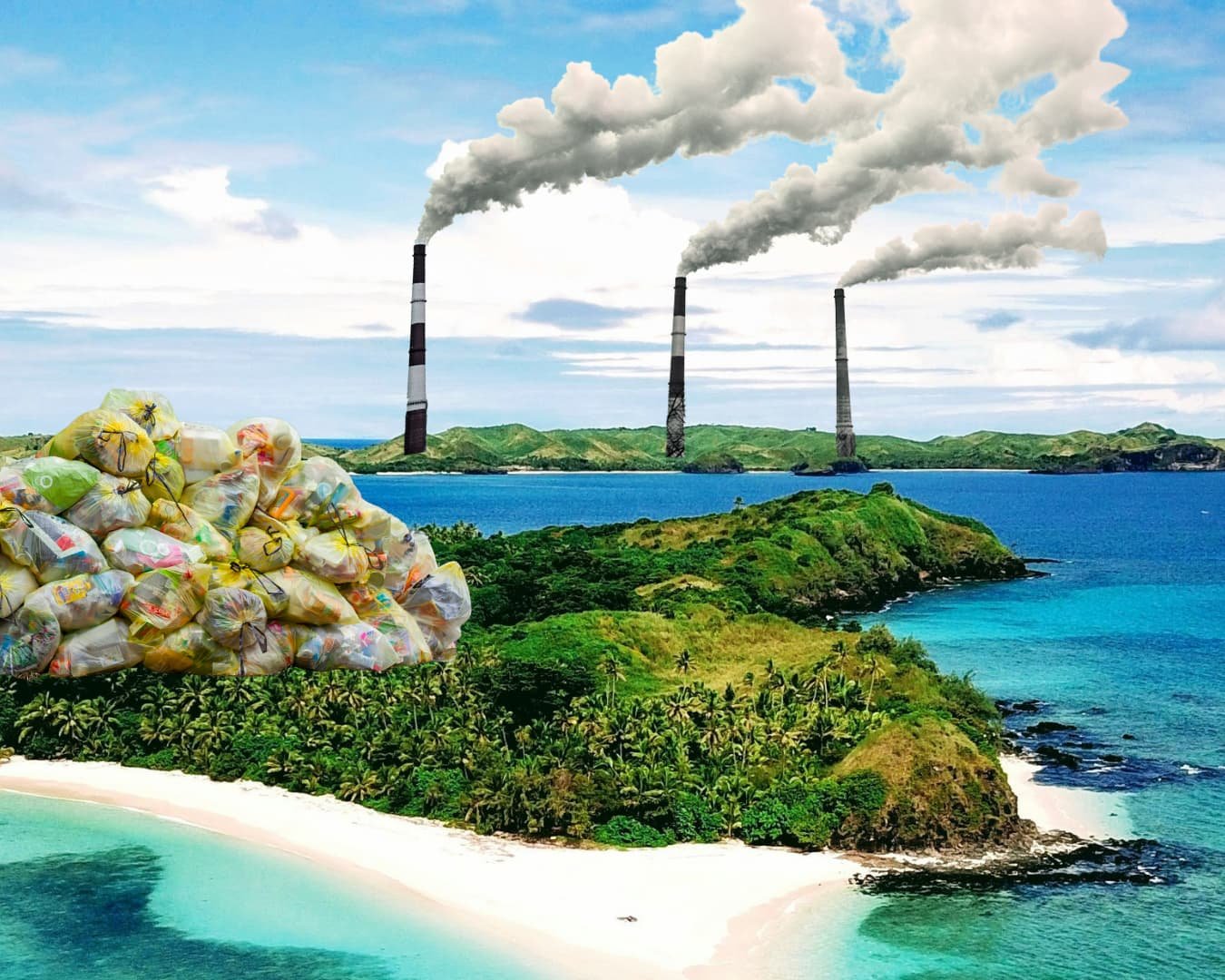
This was the situation that Kamikatsu, the smallest village in Shikoku, Japan, found themselves in in 2000. Rather than buy another even more expensive incinerator, they went the other way; decommissioned the one they’d bought and declared that they were going for Zero Waste. Today they’re sitting at about 81% diversion compared to the Japanese national average of 19%.
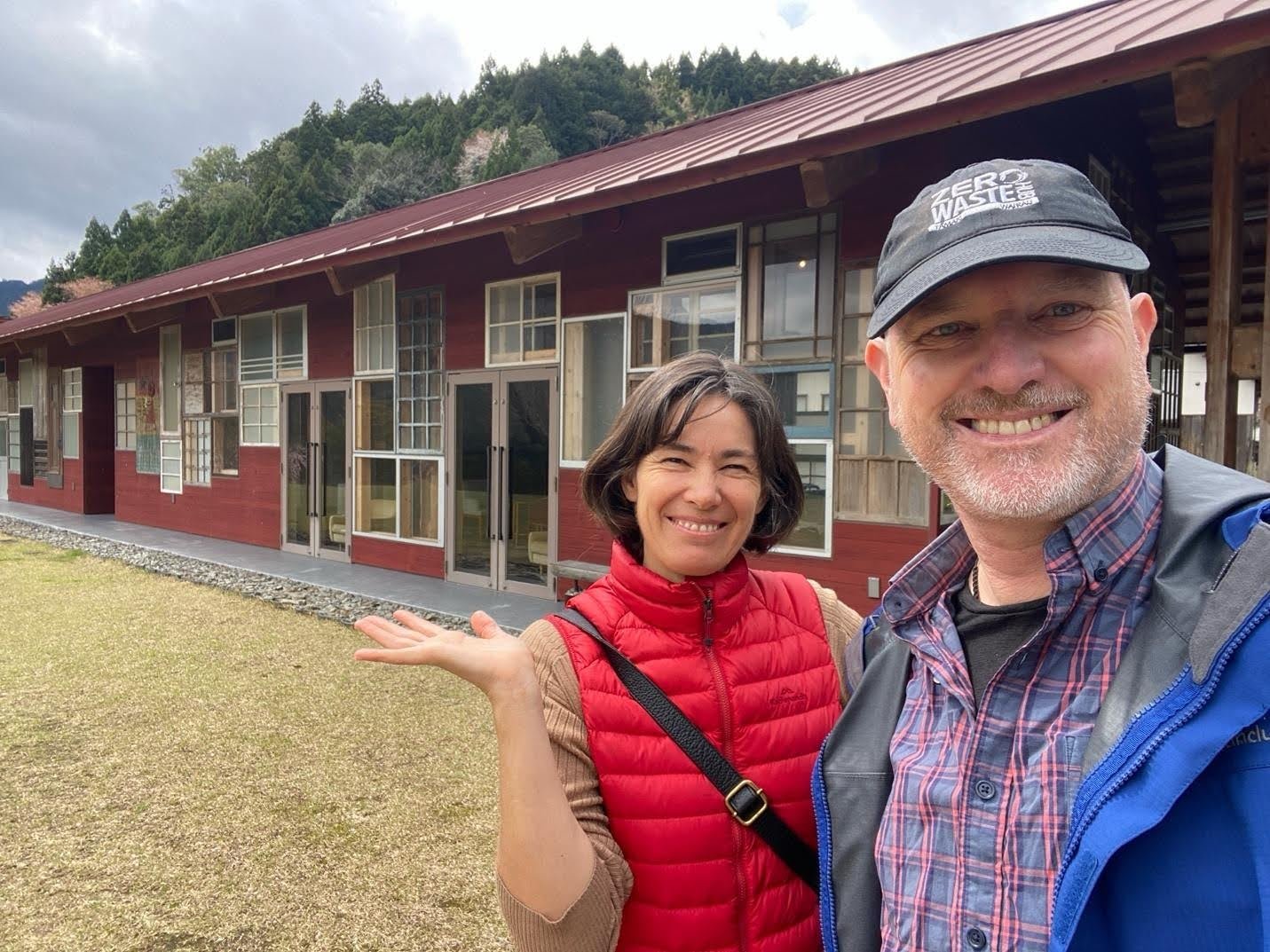
Having heard about this place at least 15 years ago, it was amazing to finally be able to pay them a visit. It turns out we’re not the only zero waste nerds making the pilgrimage to Kamikatsu, so much so they incorporated a hotel when they re-developed their community recycling centre in 2020.
The facility is shaped like a question mark, which has led to the name Why. As they explained there are so many questions to ask oneself; like: “Why can’t we reduce our waste? Why are we buying this item?”
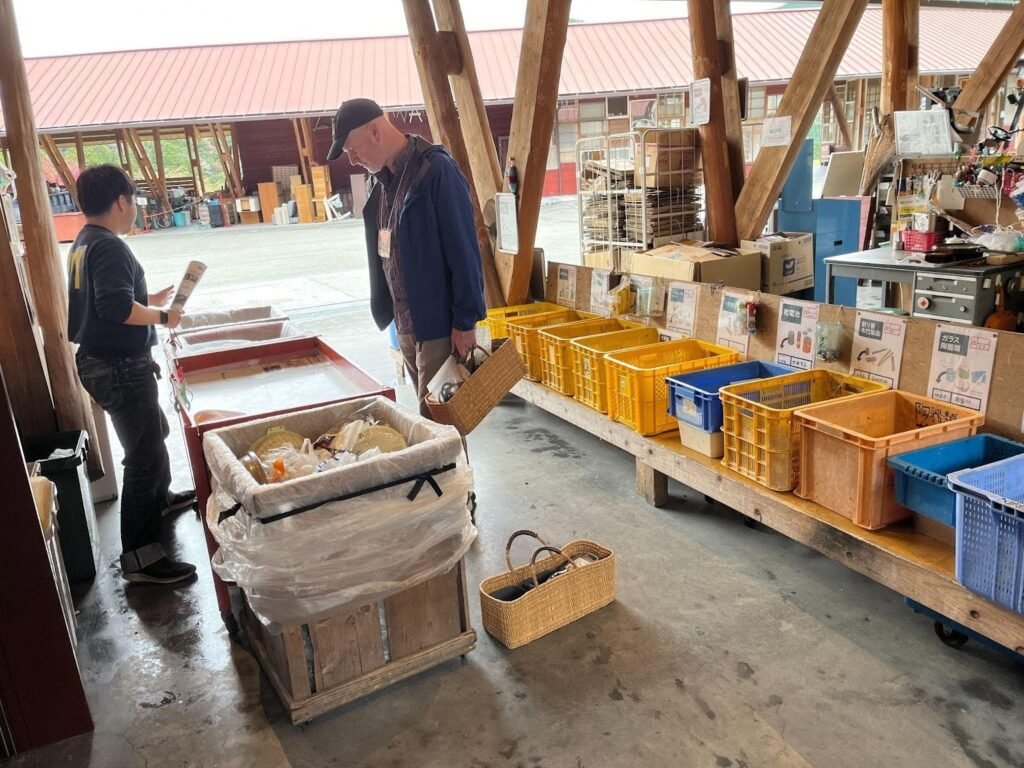
The horseshoe-shaped end of the building is the drop-off and processing area for the local residents and businesses. They sort into over 45 categories. Each has labels showing where the items go, what they get turned into, and how much it costs per kilogram. The service is rates funded, with free drop off, but the residents are very aware that the more they divert the less it ultimately costs them in rates. The left over waste is sent to an incineration plant in the neighbouring province and is the most expensive option.
Next is a processing area for bailing various plastics, breaking items down to recover metal and timber. Kurukuru is the free shop they have onsite, and then it is into a beautiful education/function room, coin laundry and finally offices. The hotel is the full stop of the question mark and has four beautiful rooms for rent. Like the main building, old windows have been reused with double thickness to create double glazing. They have upcycled curtains, mats made from denim jeans and timber harvested from the local area.
When we checked in we were asked to slice off as much soap as we thought we’d need for the stay, likewise with loose leaf tea or coffee from a bulk supply. In the morning the staff bought us a ‘zero waste breakfast’, which had the various components of a chicken noodle soup we compiled and heated ourselves. It was all in reusable glass jars and metal bento boxes. Inside the room we could split our waste into six categories and during the site tour the next day, we were able to drop off for recycling, composting or reuse.
Kamikatsu itself is in a mountainous valley area, and the zero waste ethos has permeated through a number of the local businesses. We went to a shop selling various items sewn by local residents from recovered kimonos and carp flags. Waveney bought a jacket sewn by a 92-year-old woman who looked 70! There is a sawmill over the road selling beautiful wooden items, a zero waste craft brewery, and we had lunch at a zero waste restaurant nearby.
The area has its challenges, particularly with the de-population that many rural areas of Japan are experiencing. Kamikatsu loses about 50 residents every year, and the ones that remain are aging. However, it seems the zero waste vibe is attracting some younger people into the area, who are setting up businesses. I was intrigued that the zero waste tourism is being marketed at the higher end, it’s not for the budget traveller. We paid almost NZD$400 for our one night stay in the recycling centre’s hotel and it was booked out for two months prior. Likewise, the restaurants and brewery are doing well and also weren’t cheap. Workers are being paid well, and the mahi involved are valued – hallelujah!