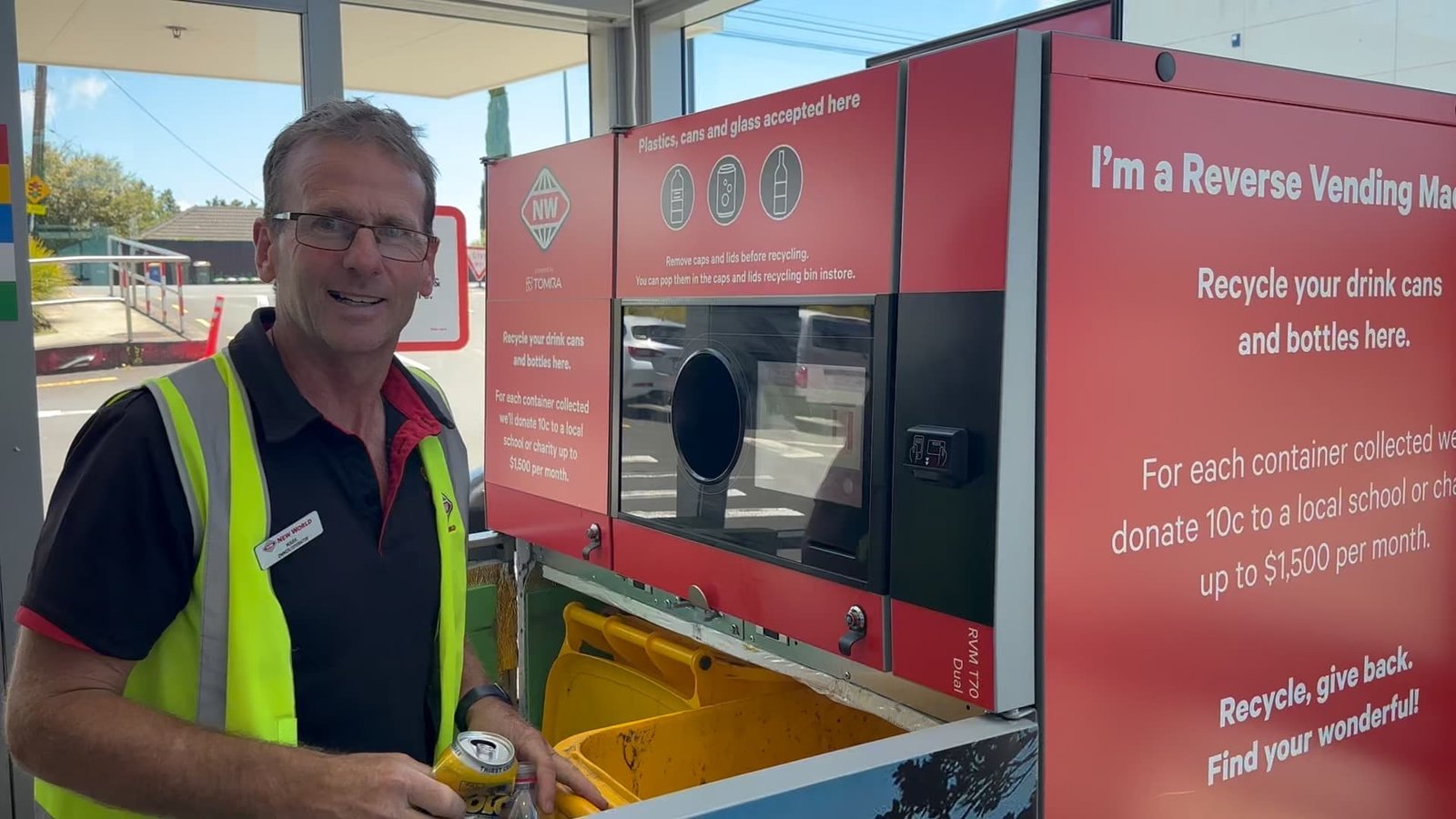
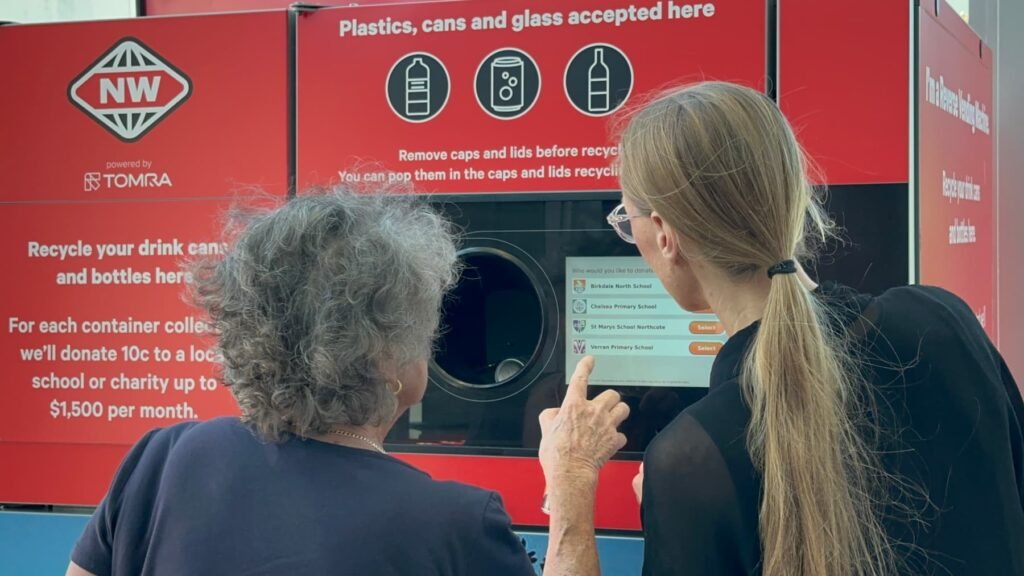
The design for a New Zealand container return scheme has already been developed, but machines like this could only be rolled out across Aotearoa if the government passed the law to introduce a nationwide scheme that required all drink producers to take part.
Container return schemes work
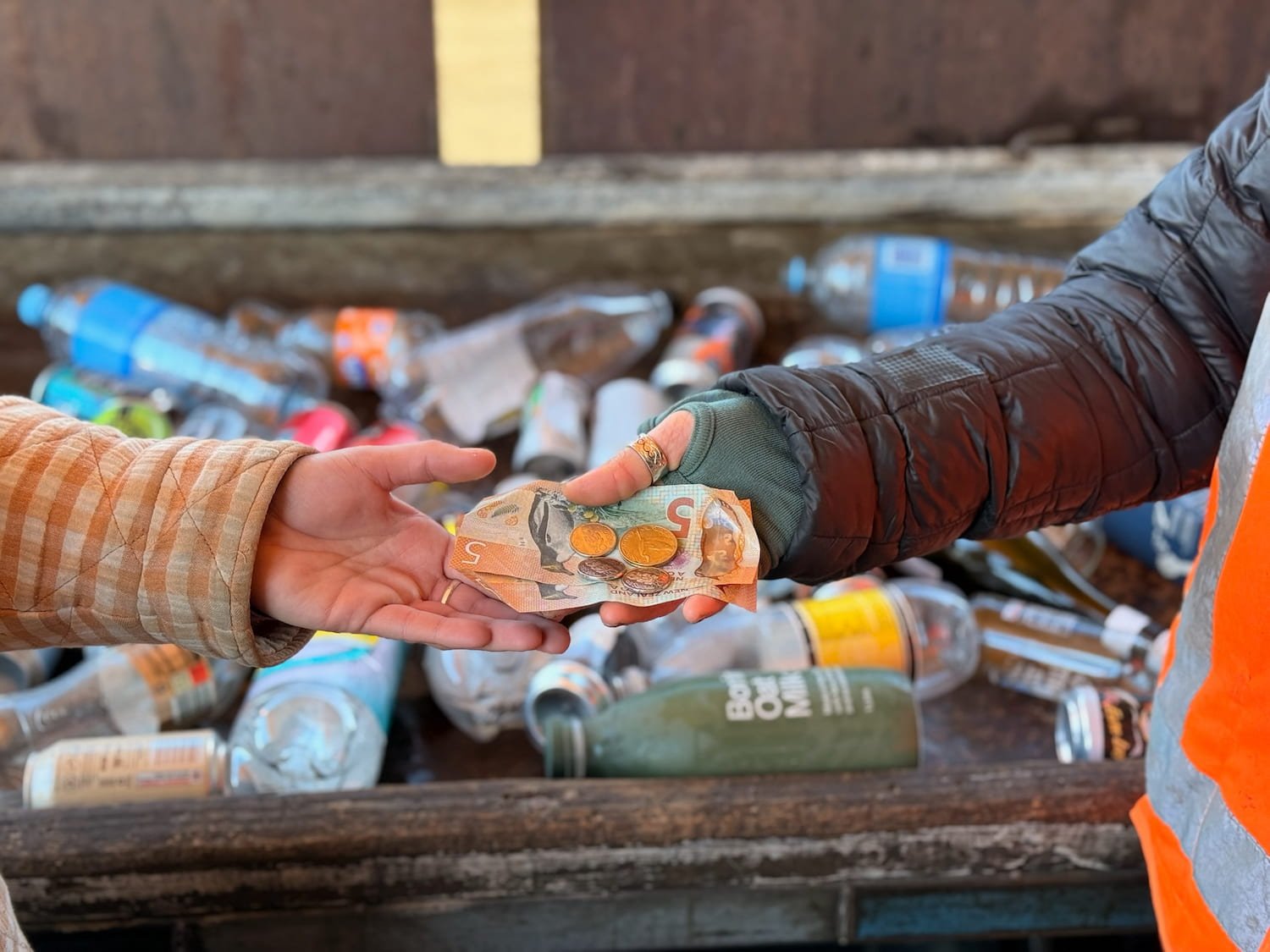
32 countries already use container deposit return schemes to encourage drink container recycling and reduce waste. These schemes typically add a small deposit (like 20c) to the price of a drink. This can be reclaimed when the empty container is returned to a drop off point, like your local supermarket.
Individuals and groups can collect and return containers to claim the deposits and raise funds. Recent research by Ipsos NZ showed 50% of kiwis see collections for fundraising as a likely outcome of a scheme for Aotearoa.
When a container return scheme is introduced in New Zealand, people will be able to use reverse vending machines to claim deposits themselves, or donate their deposits to a school or charity.
The trial is focused on donations
Each bottle or can dropped off through the reverse vending machine at the Birkenhead New World results in a 10c donation being made to a local school or charity (up to a monthly cap). Being able to collect bottles and cans and return them to help with fundraising motivates local kids, families and other shoppers to drop off their empties.
The trial is getting a great response from customers.
“I really like it. Hopefully they’ll roll out more. It feels like something that should just be everywhere.” Shopper at New World Birkenhead.
Watch this short video to see shoppers and the owner at New World Birkenhead talk about how much they love the store’s Reverse Vending Machine trial.
Working together to make the trial a success
The storefront drop off trial is going smoothly for the team at New World Birkenhead. It’s hosted by store owners, Heidi and Mark Brittenden, with the support of Foodstuffs. The Reverse Vending Machine is supplied, wrapped, and maintained by TOMRA. All the empty containers are picked up by Reclaim and recycled.
“We’re doing over 2,000 containers a week now. The community loves it, the kids love using it, and it’s been really easy to run.” Mark Brittenden, owner-operator of New World Birkenhead.
This successful trial shows what’s possible when different sectors and organisations work together to set up practical recycling systems that deliver benefits for everyone involved.
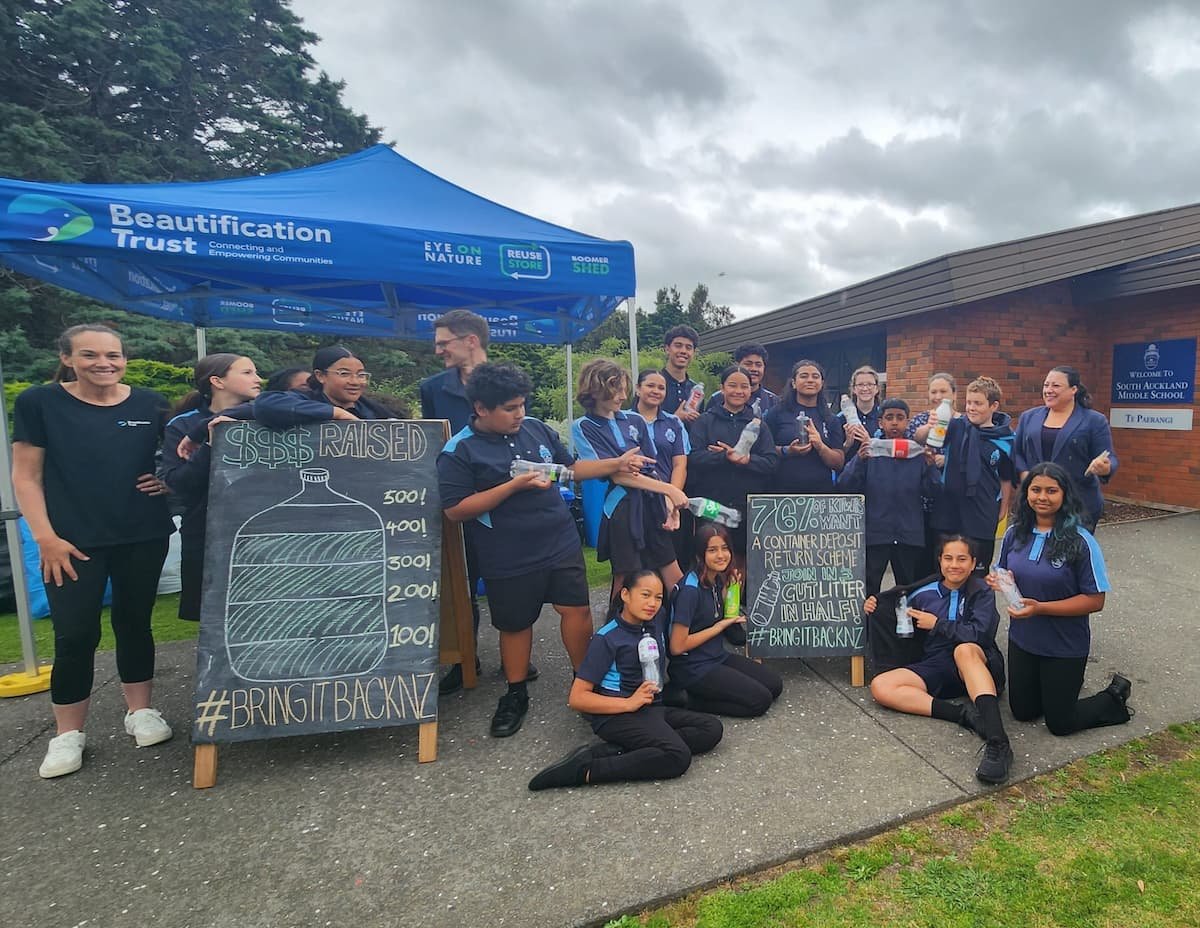
Support for introducing a nationwide Container Return Scheme is broad. It spans the recycling sector, local councils, large operators in the beverage industry, trade groups, NGOs and community organisations, as well as 76% of the public (Ipsos 2025).
Kauri Park was one of the first four schools to receive donations from the trial. Local school principal, Thomas Bigge, from Kauri Park School in Beachhaven, says the initiative is a win-win: “It’s a great way to get tamariki thinking about recycling and making a tangible difference in their community. Every bottle or can they bring back helps their school. It’s a fantastic incentive.”
Proof of concept
The trial was designed to show how RVMs work in a supermarket environment and to understand consumer support for a future rollout of a container return scheme.
North Shore Ward Councillor and Chair of Auckland’s Policy and Planning Committee Richard Hills said: “It’s great to see this innovative trial taking place in our community, and with the opportunity to spread citywide, if successful.”
Auckland Council backs the idea. It aligns with its continued advocacy for a nationwide container return scheme and its goal to achieve zero waste by 2040.
The Radio NZ Morning Report team interviewed Sandy Botterill, Head of Environmental Social Governance at Foodstuffs about the trial.
She said the machines are working really well and have proved popular with the public. However, they could only roll machines out more widely under a nationwide, government introduced container return scheme.
You can listen to the segment and read a summary here.
Return to retail is a model that works
Foodstuffs is using the trail to research how a regulated, nationwide container return scheme with voluntary participation of supermarkets could work.
Under the proposed design for a New Zealand scheme, retail stores that put a lot of drinks onto the market, like supermarkets, would be obliged to offer a take back service for empties.
Having Reverse Vending Machines in every supermarket has helped the success of container return schemes in Europe. For example, Austria has announced they have saved 82% of bottles and cans from landfill in the first year of their nationwide scheme implementation and is on track to recycle over 90%.