While New Zealand is lagging behind many of our trading partners, external and internal forces are increasing the pressure on government and business to take action. For example, the European Packing and Packaging Waste regulations are driving change through export supply chains.
The August/September issue of FMCG business got me thinking about how this might play out here in Aotearoa. Kasun Ranga gave us a heads up on a rebrand for the Glass Packaging Recovery Scheme and Packaging Forum CEO Craig Miller has been looking at what we can learn from Asia, including the rollout of Singapore’s container return scheme.
In an earlier article Craig Miller pointed out that consumer expectations and regulatory pressure are forcing brands to think about: whether their packaging works within New Zealand’s recycling and resource recovery systems, and going beyond single use and recycling to explore refill and reuse systems.
Robert Kelman from Reloop focused on how glass bottle recycling is funded in Aotearoa and explored the pressures on the industry. He recommends including glass in the NZ container return scheme ‘as the strongest route to high quality collection, lower public costs, improved recycling outcomes and future reuse’.
Three things shaping producer responsibility for packaging here
Our Waste Minimisation Act 2008 is almost 20 years old. Successive governments have committed to updating it but have not brought a draft of proposed amendments into the house. At the top of the list are improvements to the Product Stewardship/Extended Producer Responsibility sections.
Modernising the Act would give the government the powers it needs to oblige producers to take more responsibility for the products and packaging they put on the market. That includes helping to set up, run and pay for reuse and recycling systems for their packaging.
Plastic Packaging has been declared a priority product and a draft EPR scheme design has been developed and submitted to the Government. A major sticking point in the process was the desire for an ‘all of packaging’ scheme that included all materials, to reduce the likelihood of regrettable substitution. That means choosing a material that may be cheaper because it is not covered by a scheme, even if the switch has worse environmental outcomes.
Extender Producer Responsibility will eventually require producers and importers to cover the real costs of collecting and reusing or recycling their packaging both in and out of kerbside. The UK EPR scheme has been passing substantial funds across to councils to cover the cost of their collection and processing services since 2025.
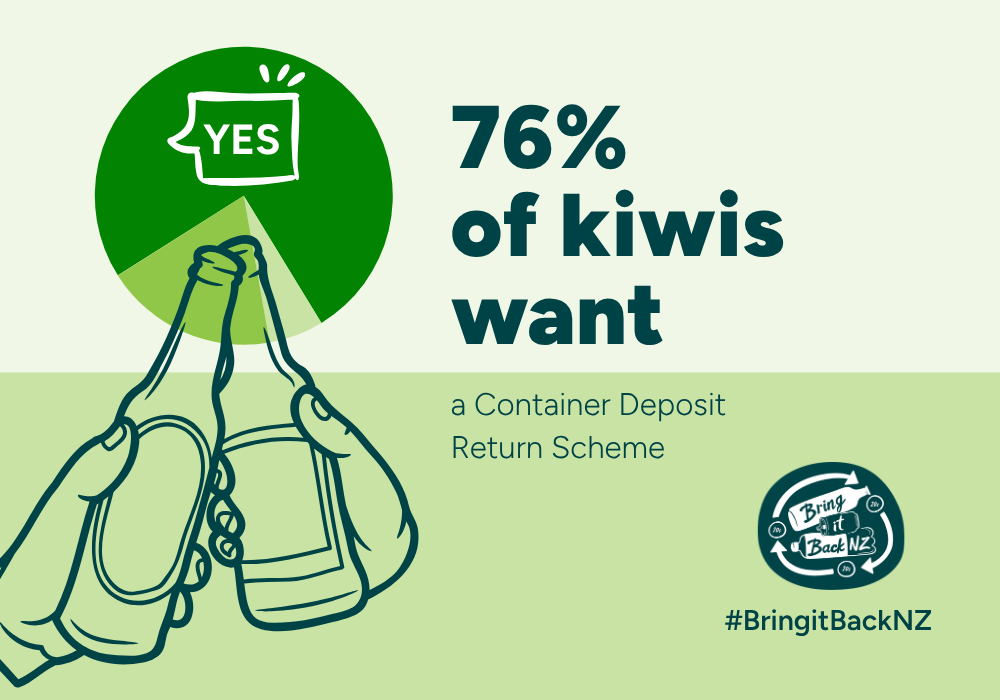
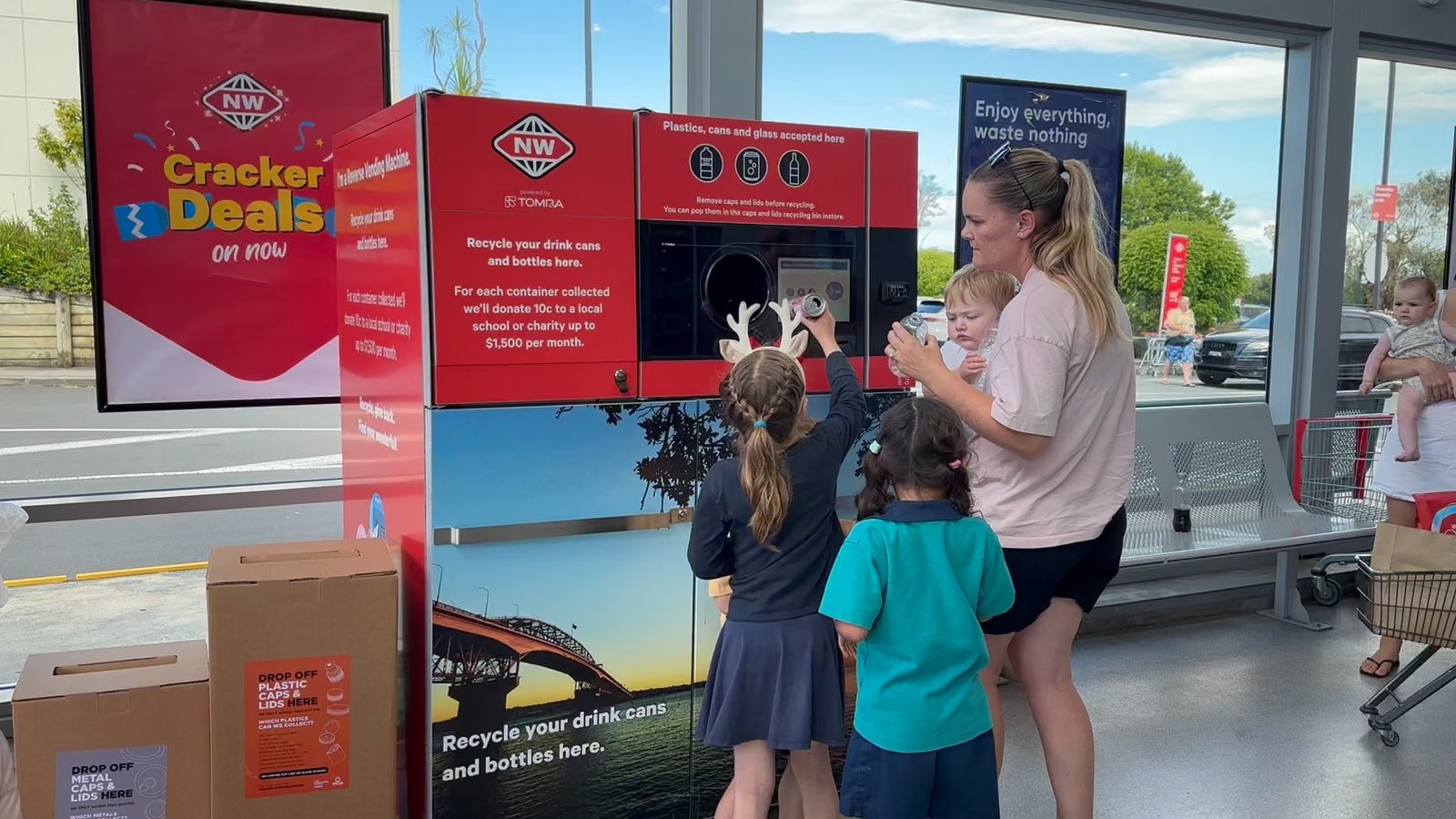
The NZ container return scheme has been developed and refined and has strong public and cross sector support. Drink container return schemes for bottles, cans and cartons have some advantages. They collect materials in separate streams, so they are able to pass high quality, uncontaminated raw materials on to packaging manufacturers to include as recycled content in new packaging.
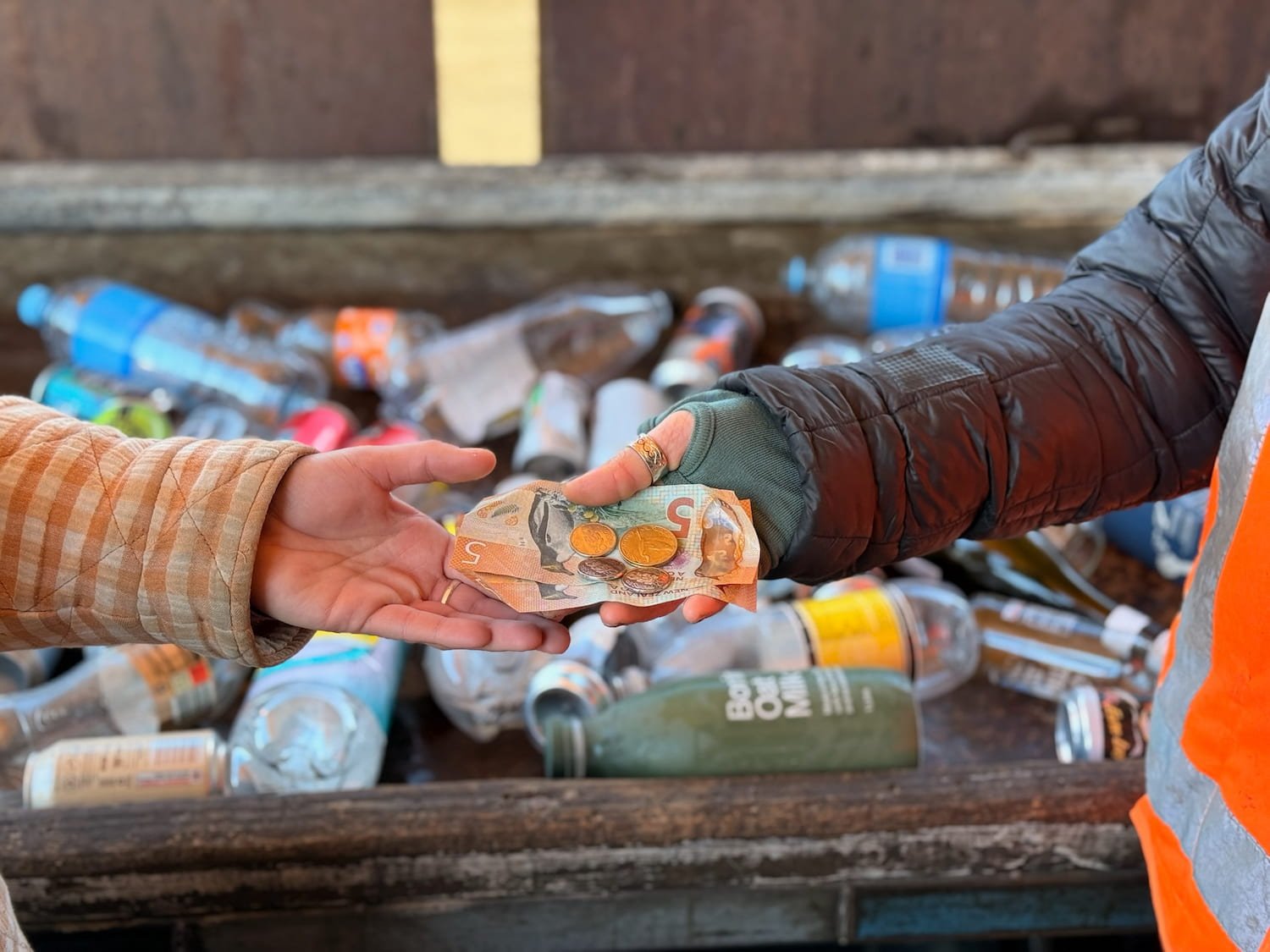
A scheme would use a refundable deposit to double return rates from 45% to 90% and the cost of recycling would be covered by the scheme, taking the pressure off ratepayers and councils who heavily subsidise recycling now.
Quality recycled content is not a given
In New Zealand, recycling quality has been a big issue since collectors shifted to commingled systems that mix glass, plastic, cans and paper together in one bin and compact the materials in a truck before they are taken to the sorting facility.
Commingled systems have high contamination rates. Auckland Council cited a 30% landfill rate for materials put in kerbside bins, due to them being unrecyclable, contaminated or becoming mixed in with other materials.
‘Wish cycling’ became common with users being told items were recyclable when they weren’t (greenwash) or because they put things into the bin in the hope that they would be recycled. The Kerbside Standardisation process has turned that around by limiting what can go into kerbside bins, but contamination and a lack of good information about what happens to recycling has led to a loss of trust and confidence in recycling systems by the public.
Step up and give us better systems
Producers need to work hard to build credibility into the schemes they run and to make sure they don’t expose themselves to ‘greenwash’ criticisms.
The pressure is on council budgets and it is no longer viable for producers to push for more of their packaging to be collected through kerbside when they do not even contribute to the cost of current collections.
Robert Kelman digs into the current situation and the future options for glass bottles in his August 2026 policy briefing. We can all agree that glass is an impressive material, infinitely recyclable and ideal for reuse. But the Glass Packaging Recovery Scheme needs a lot of work to make it a credible EPR or product stewardship option.
Confusing reporting – recovery rate and recycling rate data
The Glass Packaging Forum annual report for 2023-24 creates a recovery rate (70%) by dividing tonnes of glass collected (157,419t) by the tonnes put into the market (225,147t). 36% of this was downcycled or lost in the process (56,516 tonnes).
The ‘recycling rate’ is created by dividing the tonnes of glass that become recycled content in new bottles (104,004t) by the amount collected to give an ‘apparent’ recycling rate of 66%. Standard practice for reporting would divide the tonnes going to recycled content by the tonnes going onto the market to give the actual recycling rate of 47%.
This method has been used in previous annual reports, with the overstated recycling rate results widely circulated each year. This example from 2023-24 overstates the recycling rate by 19 percentage points.
Councils are picking up the tab
The Glass scheme has invested $3.8 million over the last 20 years in glass recovery, but that is a drop in the ocean compared with councils, which were estimated in 2020 to be spending $55+ million a year on collecting, sorting and transporting glass.
Costs have increased markedly since then. A quick ‘back of the envelope’, averaging $50 million per annum across 20 years, puts the contribution of councils and ratepayers to ‘glass scheme costs‘ around the $1 billion mark for the same period.
The glass sector has pushed hard for glass to be kept out of the container return scheme. Robert Kelman cites a cautionary tale in relation to glass and the UK EPR scheme. Glass lobbied hard to stay out of the UK container return scheme and has fallen under the UK EPR scheme instead.
The cost per unit is almost double and the EPR scheme has started more than two years earlier than the UK CRS, giving competitors a significant cost advantage. It is likely that this is driving a shift out of glass and into metal and plastic formats.
Households and businesses want good reuse and recycling systems. These examples from the glass sector show that it’s time for the packaging sector to step up and take responsibility for helping to set up, run and fund schemes that work well for everybody involved.